Authors Note
This blog post is heavily inspired by Khadija Mbowe’s YouTube video, “Gen Z and Millennials Don’t Show Up? The Flakey Generations 👀.” While the ideas shared here are my own reflections, much of this post continues the conversation Khadija started about convenience culture, flaky friendships, and how we, especially as a generation, are navigating our relationships in an increasingly disconnected world. I wanted to acknowledge her work and the thought-provoking points she raised that pushed me to dive deeper into these themes. Not all of the content in this post is purely my own—I’m simply adding my voice to the larger discussion.
The Flaky Friend Era…
Hey there, I’ve got a confession: I’m in my “flaky friend” era. Yep, I’m that person now, and honestly? I hate it. Not too long ago, I’d show up for anything and anyone. But recently, I’ve found myself making excuses to back out of plans, using “mental health” as a shield, or simply not texting back because even that feels like too much. Just last week, after months of this cycle, I finally reached out to my friends—and that’s when it hit me: I’m done. I’m done being flaky, and I’m done dealing with people who are the same way. Because let’s face it: if you don’t show up for others, who’s going to show up for you?
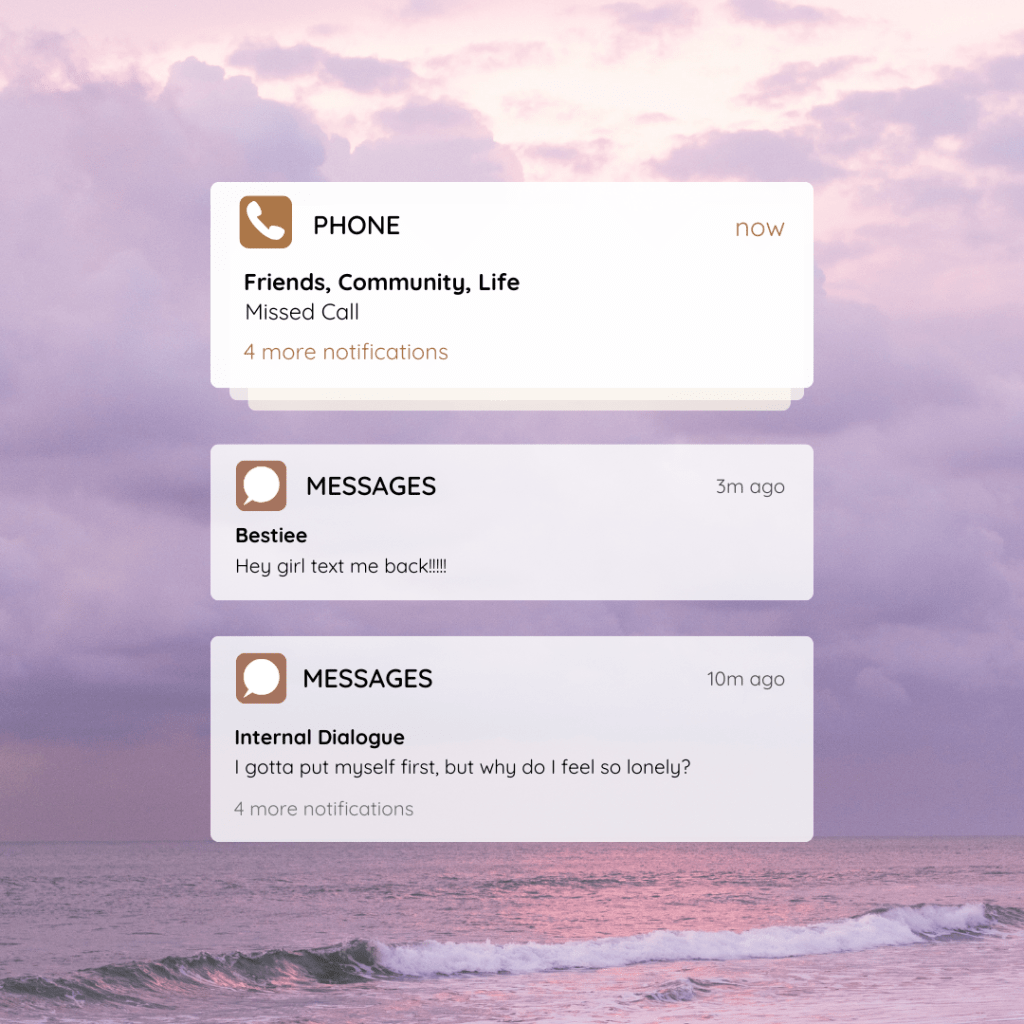
Since moving back home from Paris in July 2024, I’ve just… stopped showing up. And I honestly want to figure out why. Maybe it’s because I’m dealing with some form of functional depression, or maybe it’s because I feel like my community isn’t showing up for me, and I’m subconsciously keeping score. I don’t know if I’m that petty, but I’m not ruling it out. Whatever the reason, I know I need to address it.
What really got me thinking about this was a video from Khadija Mbowe, a YouTuber I follow. She discussed the “everyone for themselves” selfish mentality that seems to have taken over, and I had to stop what I was doing and listen. One thing she said really hit me: “We live in a time of convenience culture. It’s very convenient to do a lot of things… Sometimes, some of us need to admit that showing up for others—even when we’re tired, even when we just want to be at home rotting—is inconvenient. And this convenience culture breeds laziness. We, as a generation, tend to lean into our excuses instead of stopping to interrogate them.”
That quote hit home in the best way, because it’s true. While I agree with Khadija, I think there’s more to unpack here. Let’s talk about the shift in the Gen Z lifestyle. The role social media plays in this, how it overstimulates us with endless content, and how that might be affecting our ability to truly connect and show up for one another. We also need to look at how therapy speak has sometimes been weaponized for selfish reasons. And most of all, why we’d rather watch others live their lives online than experience life ourselves.
So, let’s dive into this, shall we?
Social Media & Perpetual Overstimulation: Everything, Everywhere, All at Once
One of my thoughts on this topic is the connection between social media and overstimulation. I know, I know—some people might find the conversation about social media’s persistent grip on our lives to be cliché, overplayed, or tired. But it’s the truth. Despite the rise of “deinfluencing” content, where people encourage us to go outside and “touch grass,” it doesn’t change the fact that we live online. The majority of our social interactions now take place in the digital world.
I did an unintentional experiment recently—staying off social media for a month (okay, not Pinterest, because I’m not a savage). The reason? Every time I opened TikTok, Instagram, or Twitter (yes, I know it’s called X now, but I refuse to acknowledge that), I felt like I was falling deeper into a boundless void. I didn’t realize how much time I was consuming rather than creating, and honestly, it really scared me.
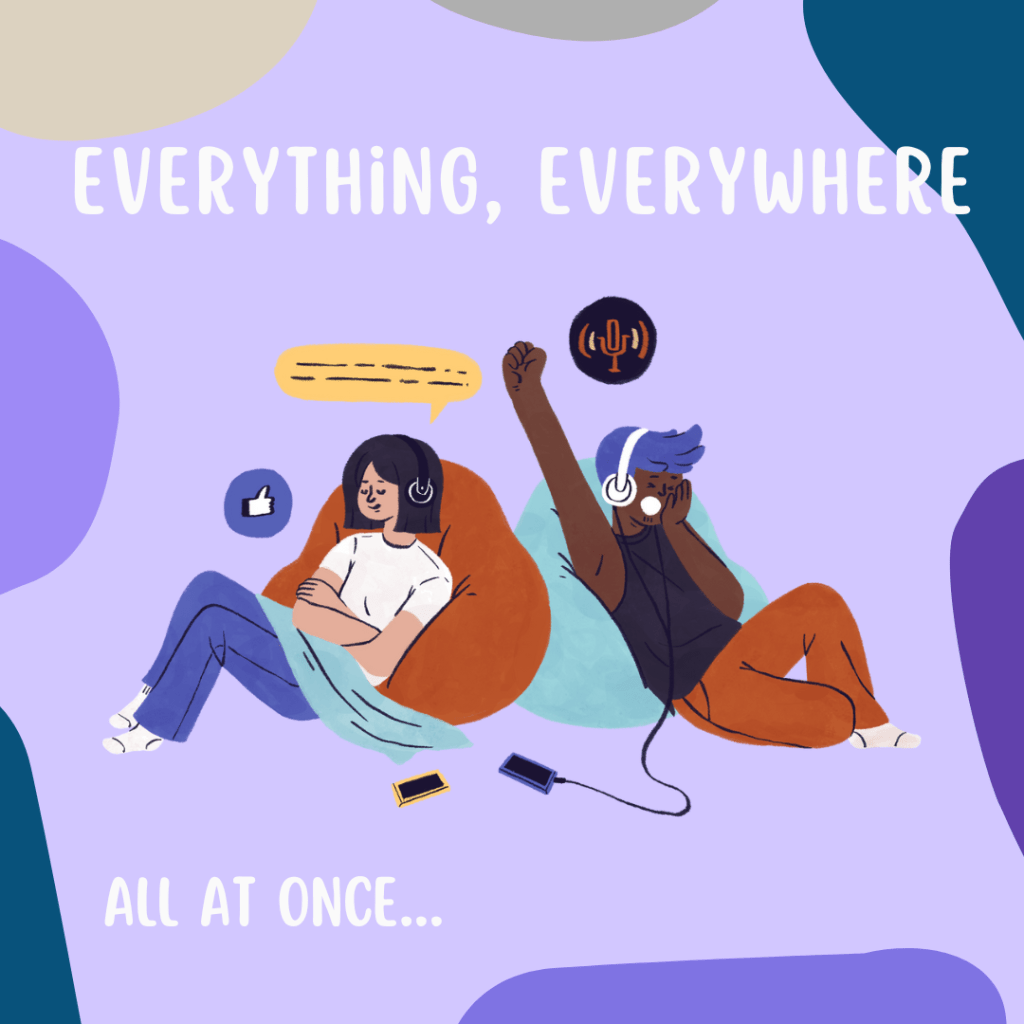
During this month off, I had more brain space. I had space to interact with real-life friends and family. Without the constant stream of everything, everywhere, all at once, I felt a calmness I hadn’t experienced in a while. I even had the opportunity to feel truly bored—something I hadn’t let myself do in a long time. And, surprisingly, boredom led me to pick up a coloring book or crochet hook to fill the time, or finally finish TV shows I’d been meaning to get to.
But diving deeper into this, the overstimulation I felt from social media doesn’t just affect how I spend my time—it also has a real impact on how I connect with people in real life. Constantly being connected to the noise of social media drains my social battery. Research has shown that overstimulation from social media can make it harder for us to form meaningful, face-to-face connections. When we’re inundated with endless content, we’re often left feeling mentally exhausted, which affects our ability to engage with people in the real world (Hernandez, 2021).
It’s this paradox: We want to stay in the loop, stay connected, and be part of the conversation. But the more we engage online, the more it feels like we’re losing the ability to engage offline. The act of scrolling through endless posts and updates may seem like a way to stay “in touch,” but it actually makes us more isolated, less likely to show up for real-life interactions, and more prone to burnout (Twenge, 2019).
Social media, while offering connection, has turned into a constant source of distraction and overstimulation. When we consume too much, we’re left mentally drained, unable to keep up with the pace of real-life conversations or maintain the energy for meaningful in-person connections. We’re so caught up in staying connected online that we forget the value of connecting in the real world.
So, let’s take a pause here. It’s not just about being overwhelmed by the endless content—it’s about the toll it takes on our social lives and mental well-being. As much as I want to stay “in the loop,” I’ve realized that sometimes it’s okay to disconnect. Because when we disconnect from the screen, we can reconnect with ourselves and the people who really matter.
A Culture of Convenience & the Loneliness Pandemic
One defining characteristic I can think of that sets the late millennial, Gen Z culture aside from past generations is convenience culture. We don’t put in the work anymore. Don’t get me wrong, I love a good uber eats moment and I’ve dabbled in a dating app or two…but as time has passed convenience culture has dramatically shaped the way we live, particularly in the United States, and it’s one that has evolved alongside Gen Z’s rise to adulthood. In today’s world, instant gratification is the standard: from dating apps, where romantic options are quite literally served on a silver platter, to food delivery apps and on-demand streaming services, everything is designed to fit seamlessly into this sort of fast-paced, individualistic lifestyle. However, what happens when this push for convenience often comes at the expense of deeper human connection in a society that has always had this sort of reputation for individualism? Gen Z, a generation that has grown up in this digital-first environment, finds it easier to access quick solutions rather than invest time in long-term relationships or efforts that require patience.
As I sit here writing this blog, reflecting on my thoughts and experiences, personal stories often come to mind that tie into the topics I want to explore. One such story is about a friend I met during my early twenties in Paris. I quickly became very fond of her. I valued our connection and, because of that, I didn’t notice at first that I was the one driving the relationship. I was the one texting, always reaching out, always sharing—but I rarely received the same effort in return. It was as though our friendship was convenient for her, and I had unknowingly become the one putting in all the work. I made the plans, put in the time, even organized her birthday celebration. And I’m sure as you read this, you’re thinking, “What is this girl getting at? How does this relate to convenience and loneliness?” Maybe you’re even thinking, “You should have had better discernment when it came to friendships.”
The point I’m making is that when we expect convenience from every area of our lives—especially in our relationships—we risk neglecting the people we care about. We make them feel insignificant and fail to nurture the potential for deep, meaningful connections. Instead of investing in the hard work required to build lasting bonds, we settle for superficial interactions, quick hits of intimacy that leave us feeling empty. That’s what’s so dangerous about a culture of convenience. We don’t realize that in trying to make things easier, we actually lose what’s truly valuable.


I’m no longer close with that friend, but writing this post and reflecting on my own experiences has given me the space to think deeply about the kind of person I want to be when it comes to friendships. It’s about finding the balance between self-preservation and building something beautiful—something that requires patience, effort, and a real commitment to the people we care about. After all, meaningful relationships, like anything worthwhile, need time and intention to flourish.
Convenience culture suggests that we should always prioritize ease and speed over the challenges of building meaningful connections, even when it’s difficult, even when we’ve had a long week and want to go home and rot, which feeds into the cycle of loneliness many feel today. Ironically, the more we prioritize convenience, the more isolated we seem to become. Despite being hyper-connected through social media and digital platforms, people report feeling more disconnected from others than ever before. The rise of social media may be contributing to this sense of isolation, with virtual interactions often lacking the depth of in-person conversations. According to a study published by the American Psychological Association, loneliness rates have surged, especially among young people who struggle to translate their online interactions into genuine, face-to-face relationships (Cacioppo & Patrick, 2008). It’s a paradox: as we have become more adept at managing our lives with ease and efficiency, we’ve also found ourselves navigating a “loneliness pandemic” that leaves many yearning for authentic connection amidst a society fixated on convenience and self-preservation.
Why Does All of This Even Matter?
As I’ve been reflecting on all of this, it’s clear that flaky friendships can have a bigger impact on our mental health and personal growth than we might realize. Community, like anything worthwhile, requires effort, vulnerability, and a willingness to be present—even when it’s inconvenient or uncomfortable. When we keep choosing convenience over connection, we’re not just hurting the people around us, we’re hurting ourselves, too. It’s so easy to fall into the trap of avoiding the effort it takes to show up for others, but the truth is, when we don’t show up for our friends, we miss out on the relationships that help us grow. The longer we lean into this habit, the lonelier we get—and the harder it becomes to break the cycle.
Finding the balance between self-care and being a better friend is tricky, but it’s not impossible. It doesn’t mean we have to burn ourselves out or sacrifice our own well-being—it’s about being mindful of how we show up. It’s about making the effort to reach out, even if it’s just a text, or carving out time to nurture those relationships that matter. Sometimes, it’s the smallest actions that make the biggest difference. We don’t need to be perfect; we just need to show up, even when it’s inconvenient. Because when we show up—for ourselves and for our people—that’s when the real connection happens. And that’s what really makes life worth living.
Sources
Hernandez, A. (2021). The Impact of Social Media on Mental Health and Socialization: An Overview. Psychology Today.
Twenge, J. (2019). iGen: Why Today’s Super-Connected Kids Are Growing Up Less Rebellious, More Tolerant, Less Happy—and Completely Unprepared for Adulthood. Atria Books.
Cacioppo, J. T., & Patrick, W. (2008). Loneliness: Human nature and the need for social connection. W.W. Norton & Company.
Pew Research Center. (2021). Teens, Social Media & Technology 2021.
 Roots and Reflections
Leave a comment